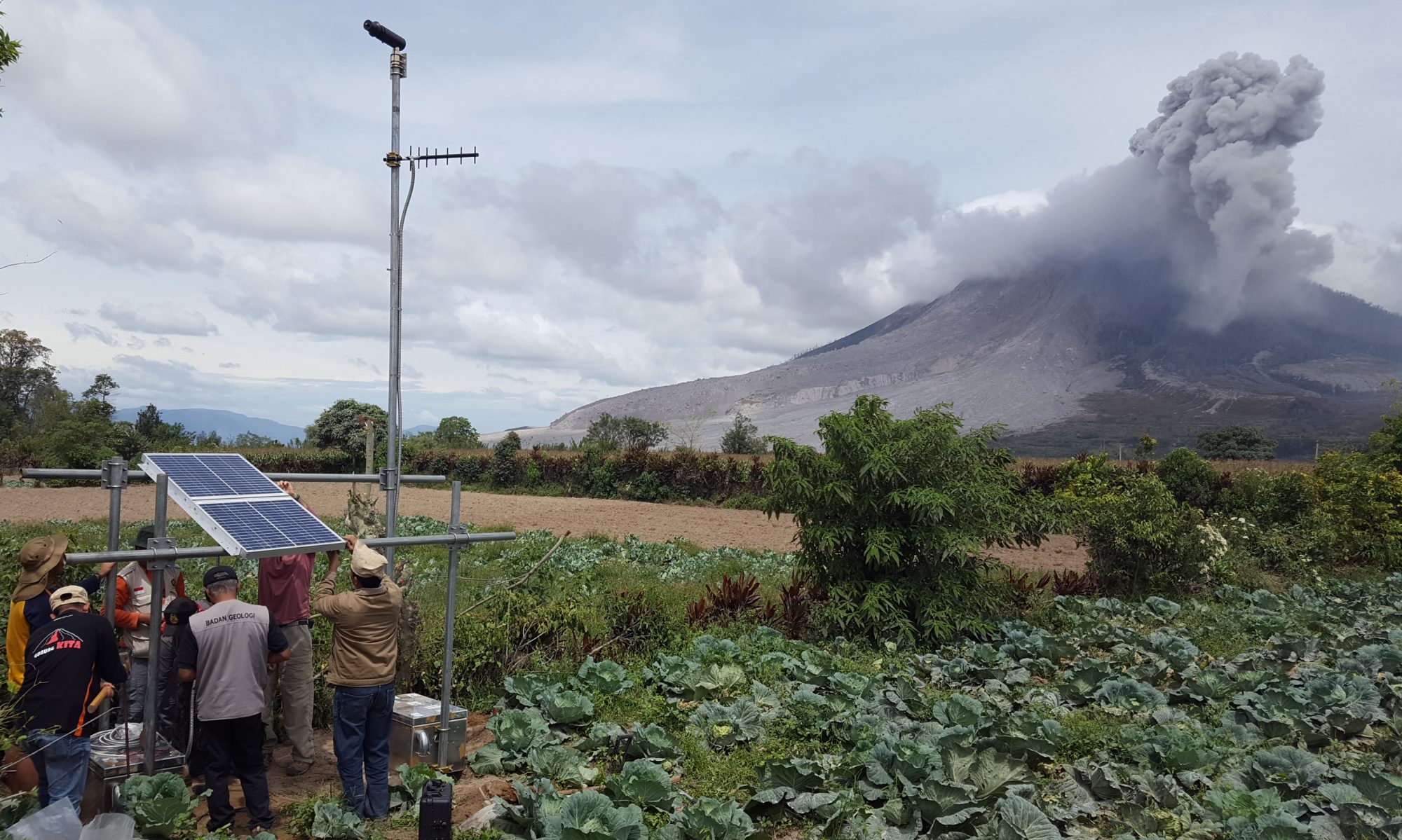

The scanning DOAS instruments used by the NOVAC community belong to a broader category of optical remote sensing tools employed by volcano observatories worldwide to monitor volcanic gas emissions. A recent article published in the Journal of Volcanology and Geothermal Research provides a comprehensive review of the latest advancements in volcanic gas remote sensing. The paper begins with an overview of the history of optical remote sensing, followed by an introduction to the physical principles governing the transmission of ultraviolet and visible light through the atmosphere. Building on these principles, instrumentation and retrieval algorithms are discussed, highlighting their respective strengths and limitations. The value of remote sensing measurements is illustrated through several case studies that have driven scientific progress in recent years. Finally, the article offers a forward-looking perspective on how emerging technologies could greatly enhance our ability to detect and quantify volcanic gas emissions, yielding new insights into critical Earth-system processes. The paper is open access and freely available at the following link.
Kern, C. (2025). Ultraviolet and visible remote sensing of volcanic gas emissions. Journal of Volcanology and Geothermal Research, 468, 108423. https://doi.org/10.1016/j.jvolgeores.2025.108423