New review of volcanic gas remote sensing available

The scanning DOAS instruments used by the NOVAC community belong to a broader category of optical remote sensing tools employed by volcano observatories worldwide to monitor volcanic gas emissions. A recent article published in the Journal of Volcanology and Geothermal Research provides a comprehensive review of the latest advancements in volcanic gas remote sensing. The paper begins with an overview of the history of optical remote sensing, followed by an introduction to the physical principles governing the transmission of ultraviolet and visible light through the atmosphere. Building on these principles, instrumentation and retrieval algorithms are discussed, highlighting their respective strengths and limitations. The value of remote sensing measurements is illustrated through several case studies that have driven scientific progress in recent years. Finally, the article offers a forward-looking perspective on how emerging technologies could greatly enhance our ability to detect and quantify volcanic gas emissions, yielding new insights into critical Earth-system processes. The paper is open access and freely available at the following link.

Kern, C. (2025). Ultraviolet and visible remote sensing of volcanic gas emissions. Journal of Volcanology and Geothermal Research, 468, 108423. https://doi.org/10.1016/j.jvolgeores.2025.108423

NOVAC featured at 2025 IAVCEI Scientific Assembly

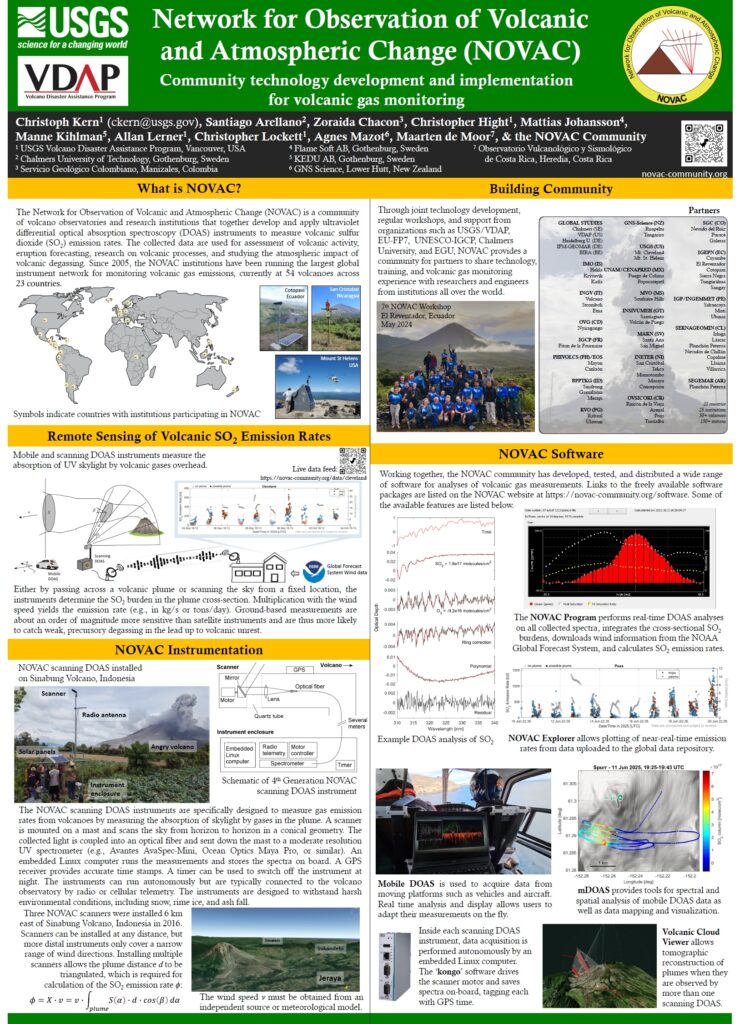
Several members of the NOVAC community will be attending the 2025 IAVCEI Scientific Assembly from June 29 to July 4, 2025 in Geneva, Switzerland. The NOVAC community and global monitoring network as a whole will be featured in a session on Open Volcanology: Open science initiatives for sharing data, tools, technology, and research. The presented poster, titled NOVAC: Community technology development and implementation for volcanic gas monitoring, is free to download and can be presented at any appropriate events in the future.

MobileDOAS version 6.6. supports GNSS

Version 6.6. of the MobileDOAS software is now available for download from the Software page of the NOVAC website. This new version expands the GPS functionality to include GNSS messages – e.g. from the GLONASS and Galileo satellite constellations. Some modern GPS receivers such as the GlobalSat BU-353N5 require this update. The new version also includes an updated implementation of the spectral evaluation functions. As before, be sure to choose the version corresponding to the spectrometer you are using. Avantes and Ocean Optics spectrometers are currently supported.

NOVAC Workshop Program

We are excited to release the Full Program for the 7th NOVAC Workshop! The Official Opening Ceremony will be held on Monday, 6 May 2024, 9:00 at the at Escuela Politécnica Nacional, Hemiciclo Politécnico, Edificio 3 (Administración Central). A donation of equipment from USAID to the IG-EPN for monitoring active volcanoes in Ecuador will follow.

We are extremely grateful to our hosts and sponsors who made this event possible.

Instituto Geofísico Escuela Politécnica Nacional, Ecuador
USAID USGS Volcano Disaster Assistance Program
UNESCO International Geoscience Programme Council
European Geosciences Union
Chalmers University of Technology, Gothenburg, Sweden

7th NOVAC Workshop

The 7th NOVAC workshop will take place from 5 to 12 May 2024 at El Reventador volcano, Ecuador. The objective of this workshop is to facilitate the exchange of knowledge and experience among staff from partner institutions. The workshop is aimed at gas geochemists and field engineers working on NOVAC instrumentation, data analysis, and interpretation. An introduction will be given to NOVAC instrumentation, software, and analysis tools, and new technology and software features will be demonstrated. Partners will share insights on volcanic systems obtained from their own gas measurements, and novel analysis of NOVAC data will be discussed. Finally, plans for the coordination of the network and future NOVAC activities will be made. For additional information on the cost, logistics, and schedule of the workshop, as well as instructions on how to register, please see the 2nd Circular. Registration deadline is Feb 29, 2024.

This workshop is possible thanks to financial support from the Volcano Disaster Assistance Program (VDAP) of USGS/USAID, the International Geoscience Programme of UNESCO/IUGS, and the European Geosciences Union (EGU).

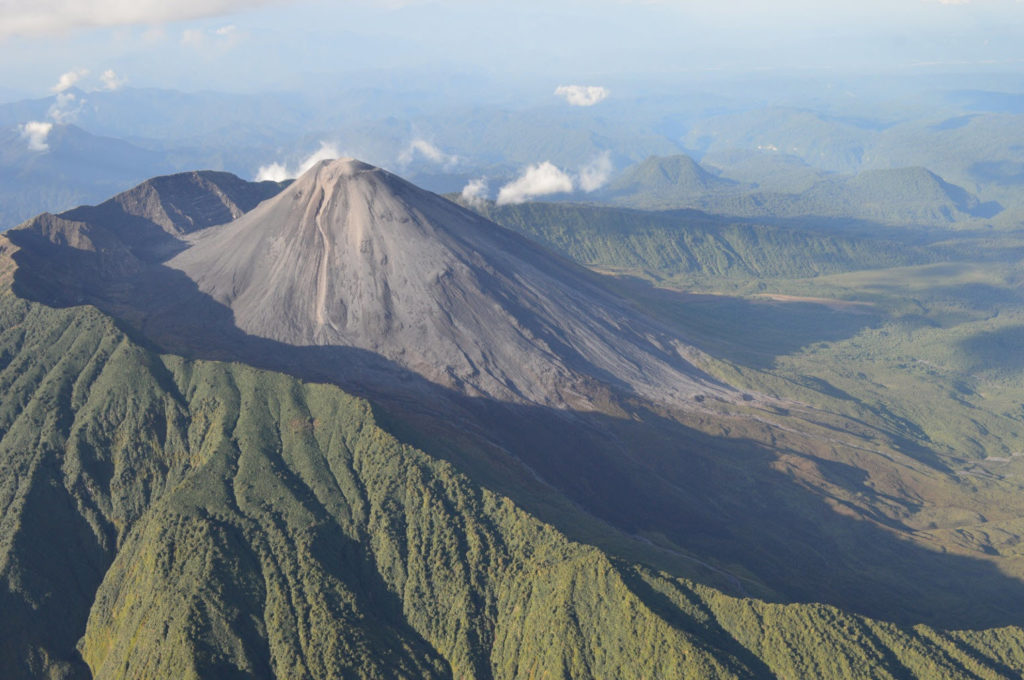
El Reventador volcano. Photo by J. Salgado (IG-EPN)

DOAS networks upgraded at San Miguel and Santa Ana volcanoes, El Salvador

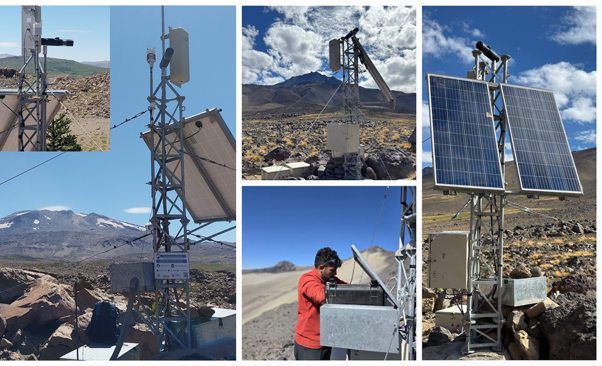
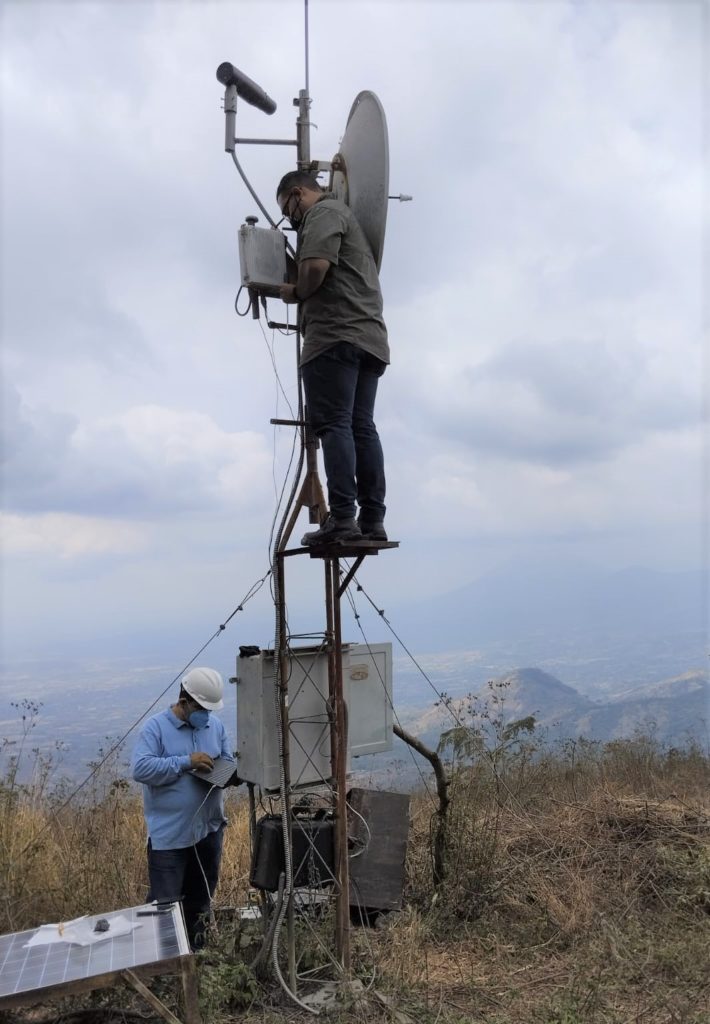
San Miguel and Santa Ana volcanoes (El Salvador) are both very active, high-threat volcanic systems. San Miguel is El Salvador’s most active volcano and has experienced multiple eruptions in recent years, including in 2022 and 2023. Santa Ana hosts a highly acidic lava lake and fumaroles and has a geologic record of diverse eruption styles. Santa Ana is also a popular tourist destination, which amplifies the importance of tracking any changes in its volcanic activity. El Salvador’s Ministerio de Medio Ambiente y Recursos (MARN) was one of the first members of NOVAC and has installed multiple generations of NOVAC instruments across the country over the last ~15 years. With assistance from the USGS-USAID Volcano Disaster Assistance Program (VDAP), MARN gas geochemists and field engineers recently upgraded NOVAC Scanning DOAS instruments at both San Miguel and Santa Ana volcanoes. San Miguel is now monitored with two DOAS instruments and Santa Ana has a single, well-positioned instrument downwind. Additionally, MARN has a new MobileDOAS system for vehicle-based campaign measurements of SO2 at their volcanoes. Collectively, these updated NOVAC instruments will enable MARN to monitor gas emissions and how they relate to changing volcanic activity at their two most active volcanoes.

NOVAC instruments installed on Merapi Volcano, Indonesia

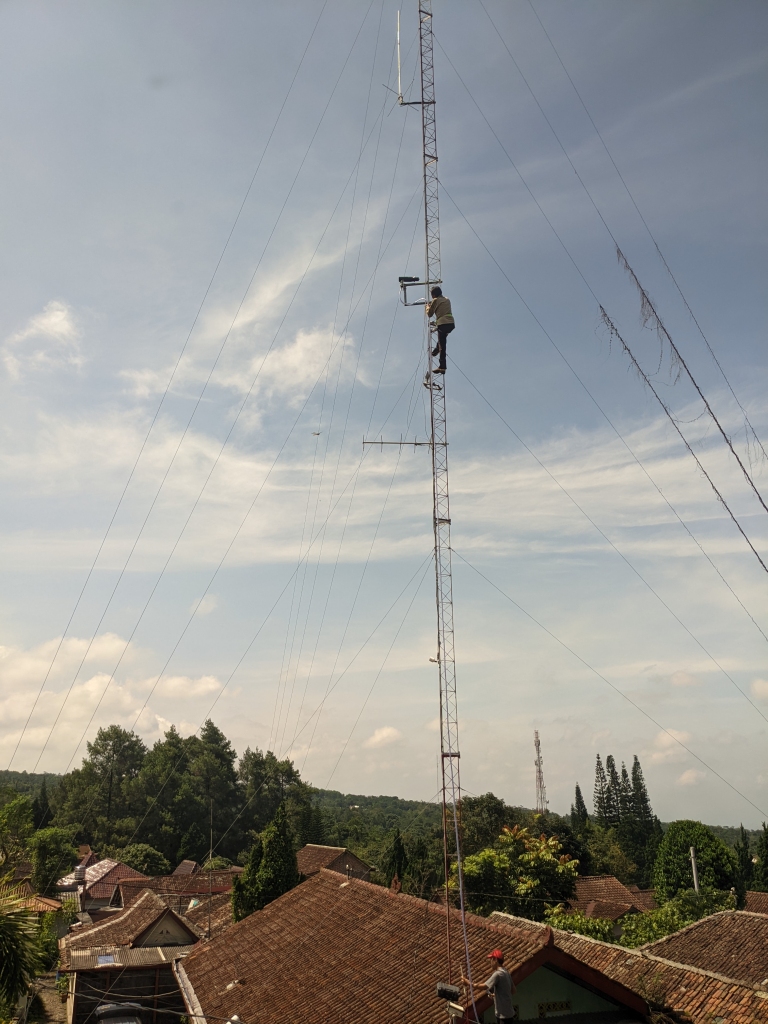
Merapi Volcano (Java, Indonesia) is a high-threat volcano with a history of eruptions that have had significant impact on tens of thousands of people living in the larger Yogyakarta metropolitan area. Merapi has been particularly active, erupting lava and producing pyroclastic flows, and the volcano’s alert level has been kept at the second highest mark (“Siaga”) since 2020. Supported by the USGS-USAID Volcano Disaster Assistance Program, gas geochemists and field engineers with the Indonesian Balai Penyelidikan dan Pengembangan Teknologi Kebencanaan Geologi (BPPTKG) have now installed a network of Scanning DOAS instruments on the volcano. Located at forward observation posts to the north, west, and south of the Merapi’s summit, the instruments allow SO2 emission rates to be tracked continuously and compared with other indicators of volcanic activity. The BPPTKG produced a short video describing the project, which can be viewed at https://www.youtube.com/watch?v=c8FmAJ-zCPk&t=1s

NOVAC stations installed on Rincón de la Vieja

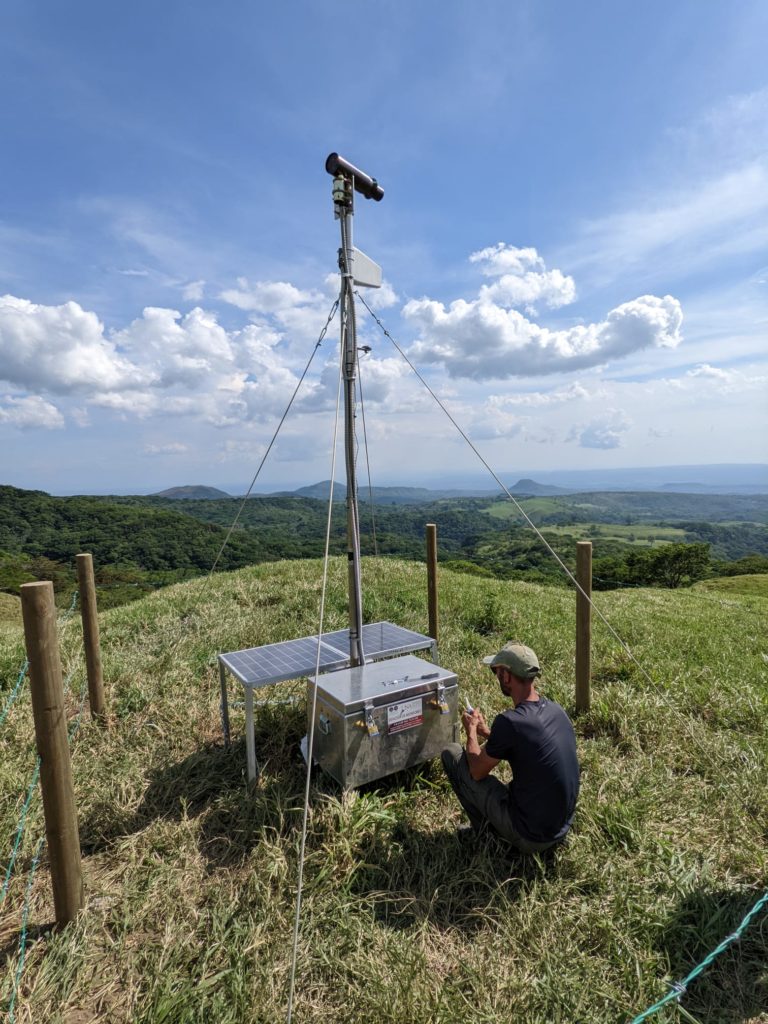
Located in NW Costa Rica, Rincón de la Vieja produced a significant eruption on June 28, 2021, which triggered lahars/mudslides that threatened communities and infrastructure to the north of the volcano. This was likely the most significant eruption from Rincón de la Vieja in the last two decades and could indicate a new phase of enhanced activity. During May 9-11, 2022, a team of field engineers and gas geochemists from the Observatorio Vulcanológico y Sismológico de Costa Rica (OVSICORI) and the USGS Volcano Disaster Assistance Program (VDAP) successfully installed two Scanning DOAS on the east side of the volcano, approximately 6 km from the summit crater. The data from these instruments will help OVSICORI assess ongoing activity at the volcano and inform risk assessments.

OVSICORI gas geochemist Maarten de Moor applies sealant to a new NOVAC station installed on Rincón de la Vieja volcano.

New video tutorial shows how to troubleshoot the scanner end switch

One common failure mode for the NOVAC scanners is a loose or incorrectly positioned scanner end switch. When working properly, the end switch defines the reference position of the scanner and tells the instrument which way is up. Problems with the end switch can cause the scanner to rotate indefinitely without the measurement ever starting, or make the instrument scan the ground rather than the sky. A new video in the Tutorials library shows how to troubleshoot this issue.

Welcome Carlos Laverde as new Software Working Group Coordinator

We are excited to announce that Carlos Laverde (Servicio Geológico Colombiano) has agreed to step into the role of the NOVAC Software Working Group Coordinator. Thank you Carlos! In recent years, Carlos has been one of the most active members in our community, particularly in the testing and development of software. Working closely with Diana Norgaard, he provided valuable feedback on the NOVAC Program and Mobile DOAS applications. His recent work also includes developing a platform for visualizing  spatial SO2 data from the TROPOMI satellite instrument. Working at SGC, his experience with operational volcano monitoring provides him with valuable insights into the priorities and challenges of operating continuous monitoring networks such as NOVAC. We look forward to working with him on all software-related tasks!